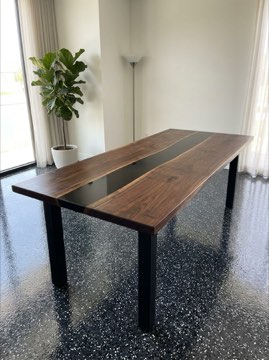
 Made to order · 9 wks
Dining
Blackwater
One walnut slab split down its own crack and rejoined with a black river.
96" × 42" · ≈120 rings$7,400
In the shop
Every floor Epoxy Design PRO lays starts as the same two-part resin these tables are cast from — same degassing, same cure schedule, same person watching the pot life. The difference is that a table is inspected from eight inches away, so it's the harder test. Watch us pass it, then decide about your garage.
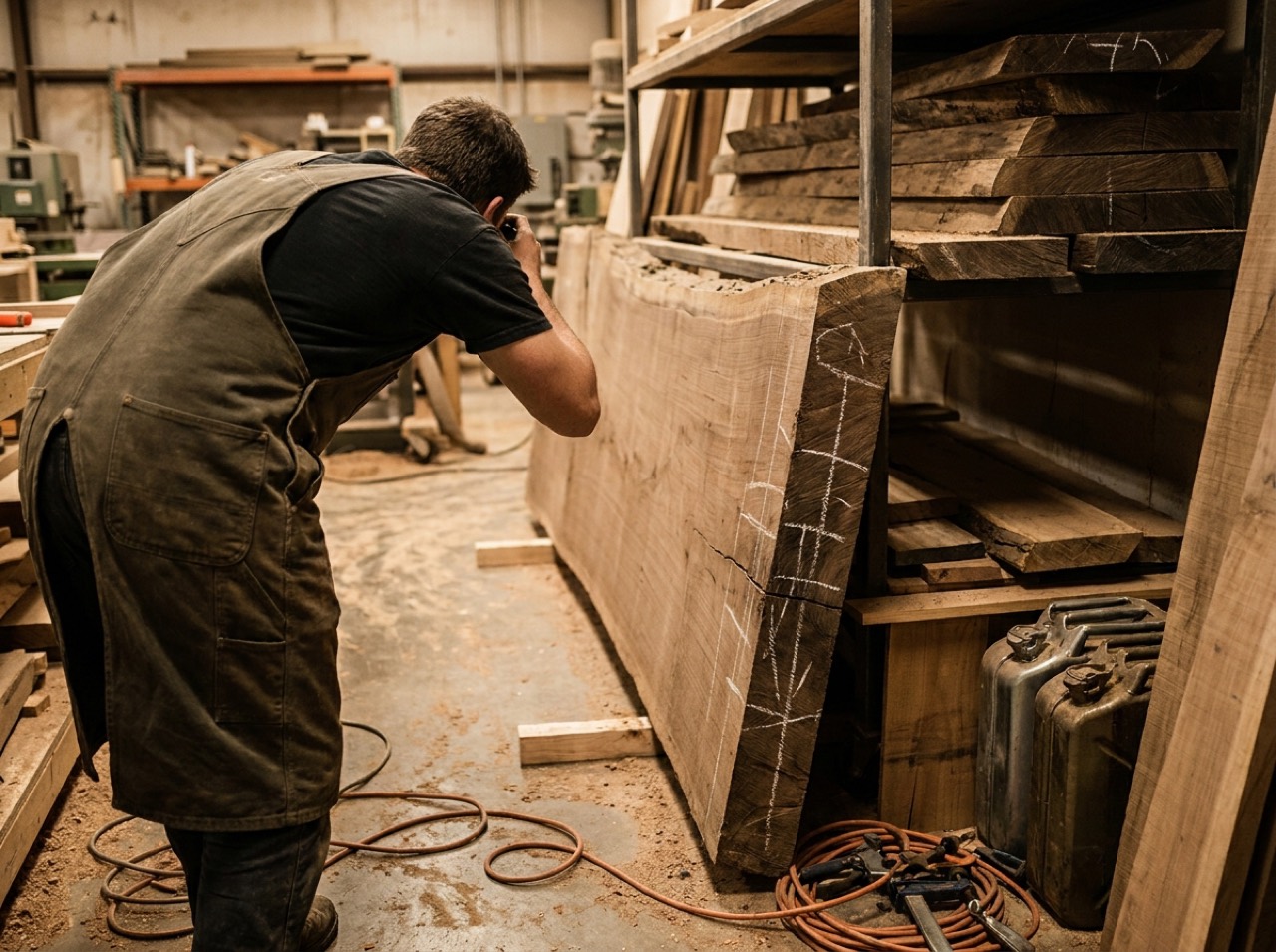 01
014 years air-dried · kiln to 7%
We buy rough-sawn and air-dried, then kiln down to 7% moisture. A slab that isn't dry will move after the pour and split the resin, so this is the step nobody sees and everybody pays for. The end grain gets chalked with the ring count — that number follows the piece all the way to your invoice.
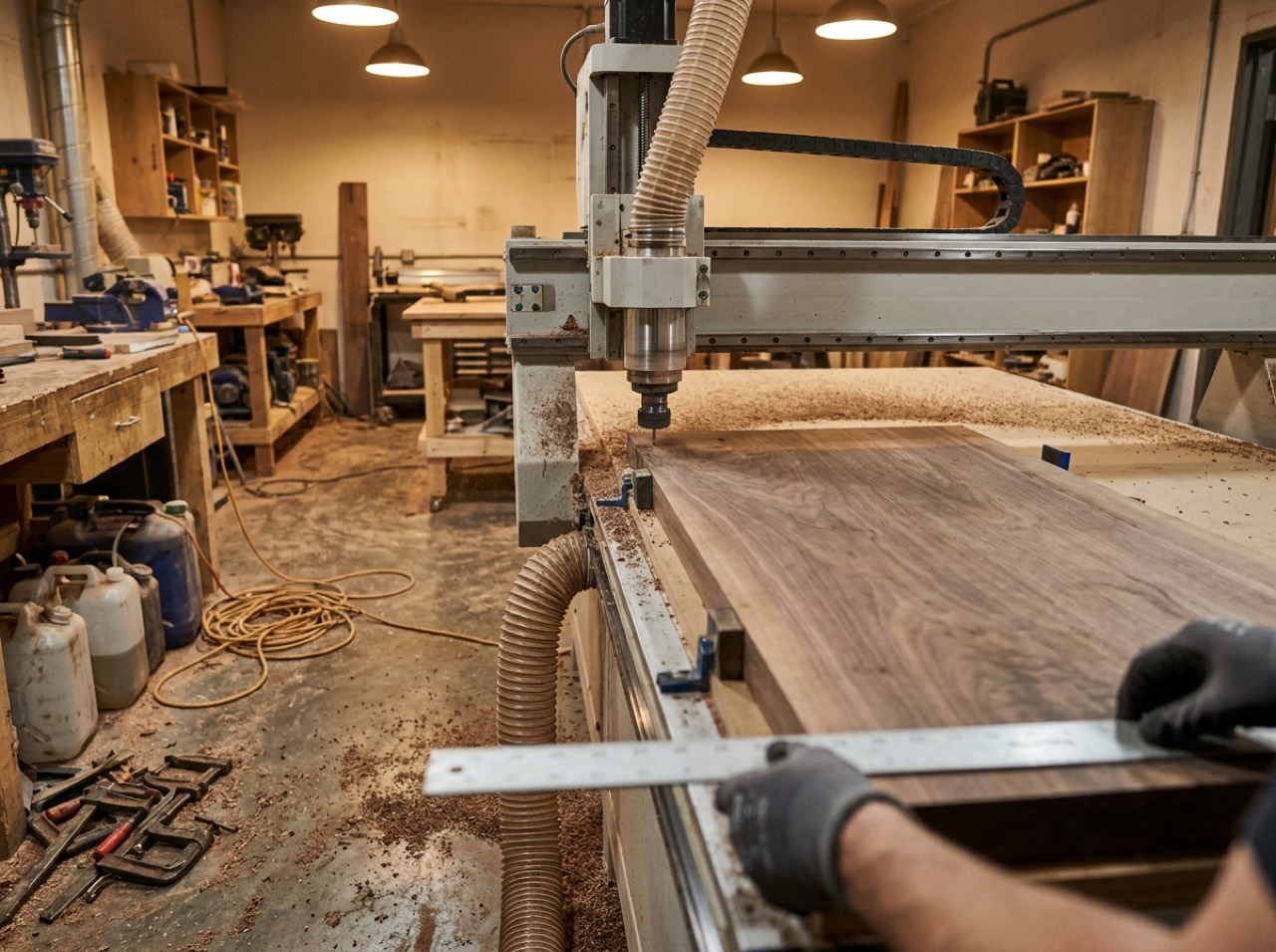 02
02Both faces machined · all voids sealed
Both faces get CNC-flattened against a torsion box. Then every knot, check and insect track is flood-sealed — miss one and the pour finds it overnight and drains through onto the floor. Live edges keep their shape; only the bark comes off, by hand.
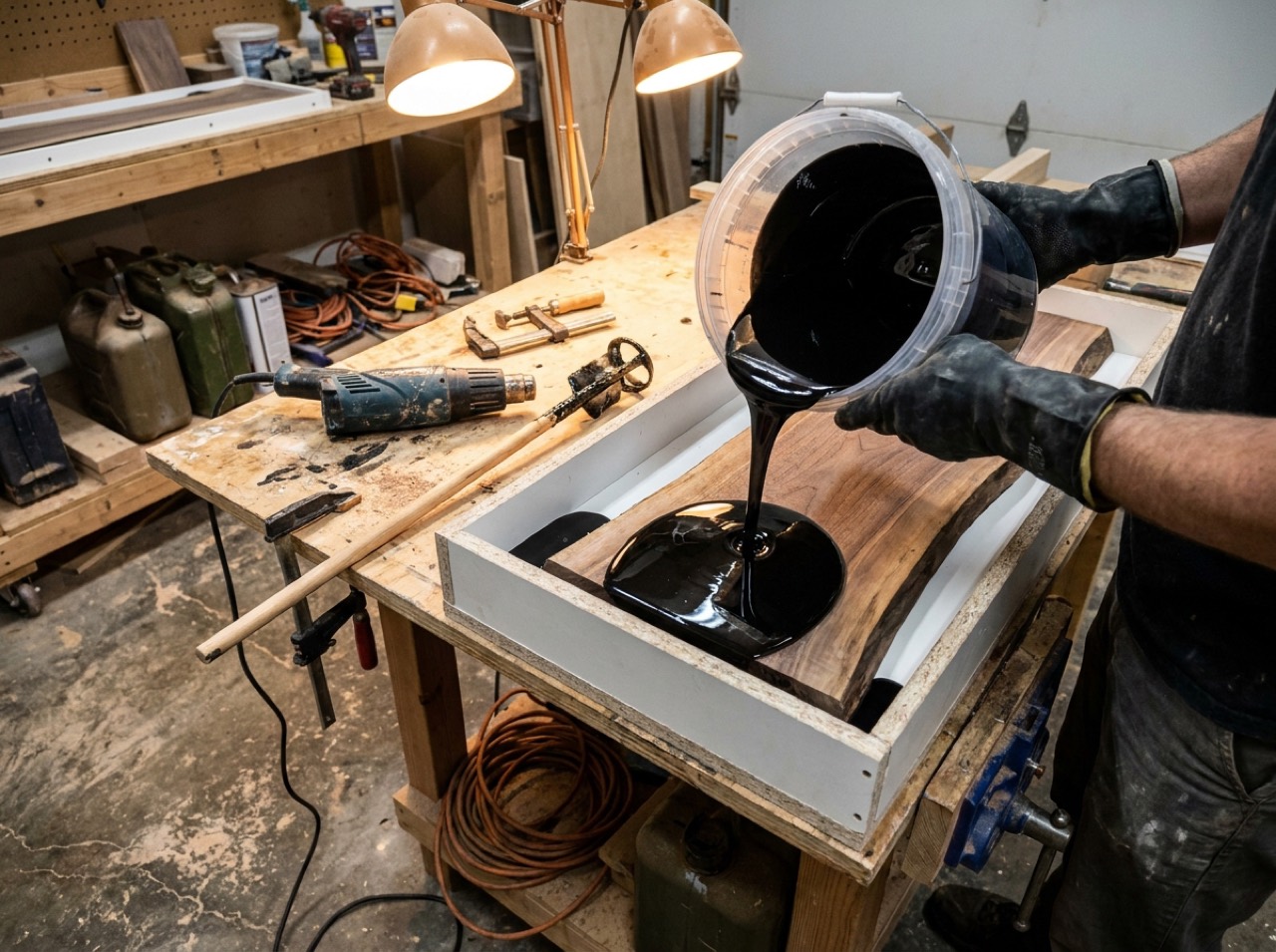 03
032" lifts · degassed · 6-day cure
Deep-section resin goes in at about two inches per lift, degassed between lifts, because thick epoxy generates its own heat and a single deep pour will cook itself cloudy. Tint is built up across passes so colour deepens with depth instead of muddying. Then six days of nobody touching it.
 04
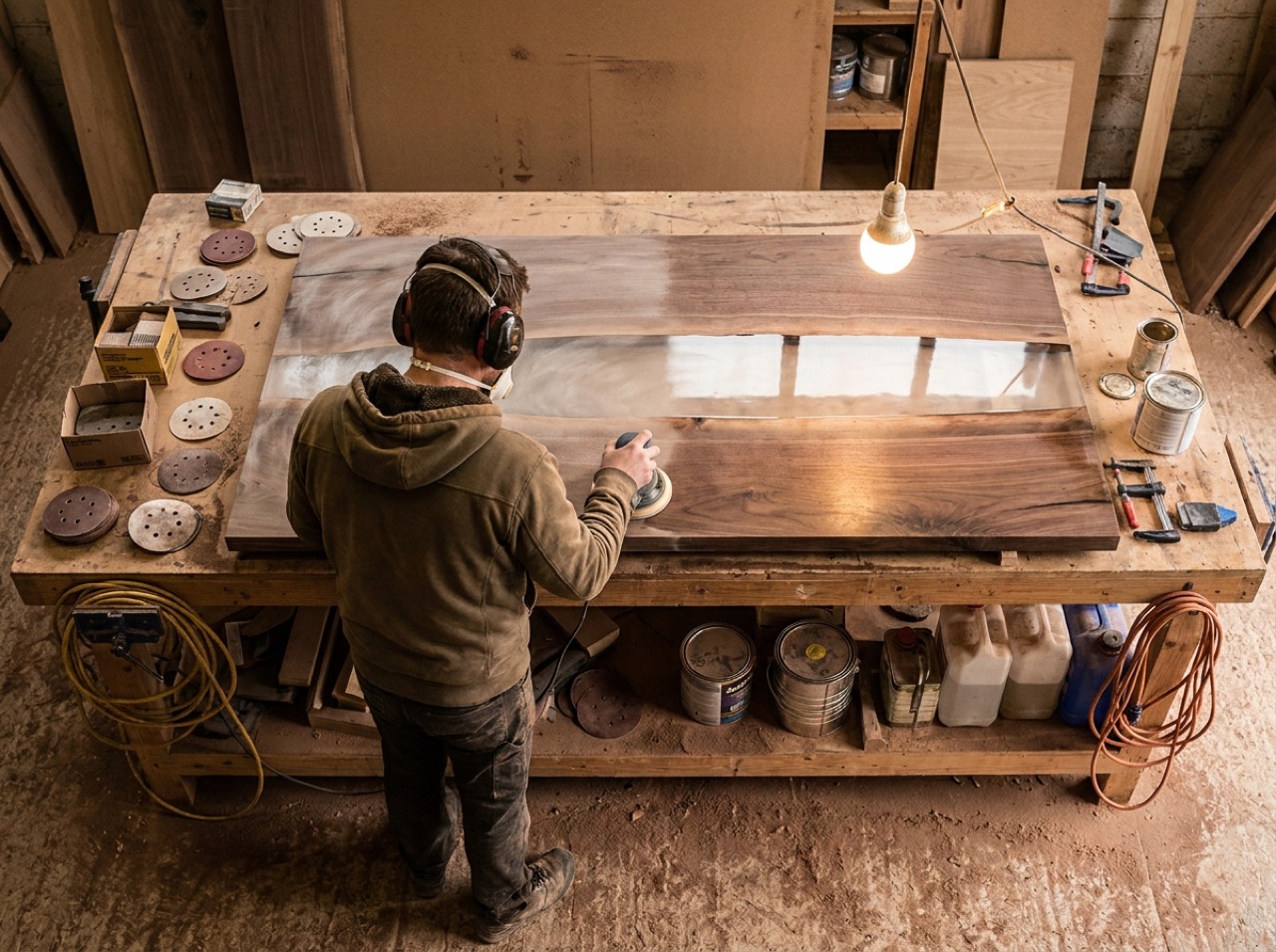
04Sanded to 3000 grit
Up through the grits to 3000. This is where a cheap table gives itself away: stop at 400 and the resin stays hazy, skip a grit and you leave a scratch that only shows once the oil goes on. There is no shortcut and no machine that does it for you.
 05
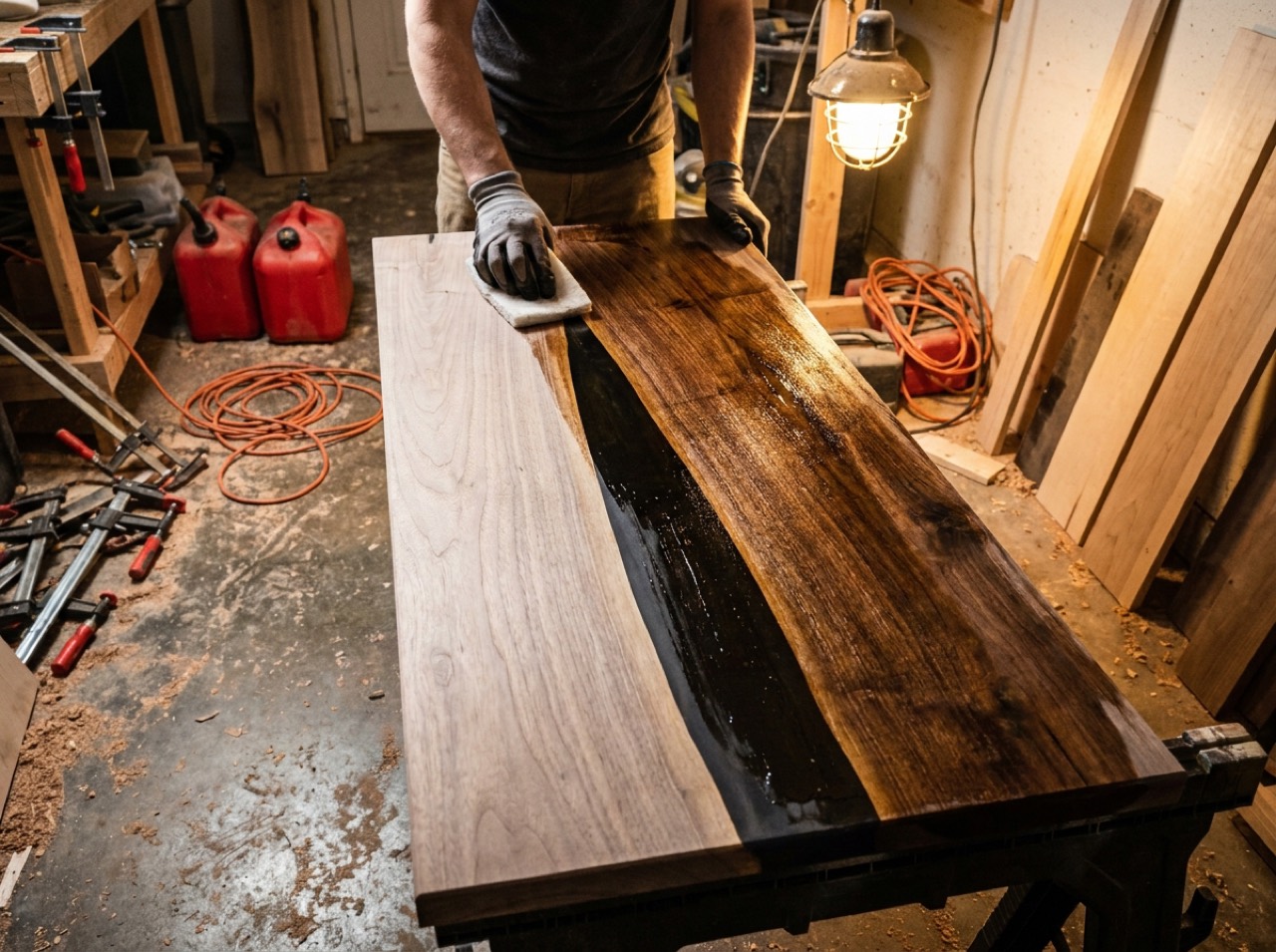
05Hardwax oil · repairable finish
Hand-rubbed hardwax oil rather than a sprayed lacquer shell. It sinks in instead of sitting on top, which means a scuff sands out and re-oils in an afternoon instead of needing the whole top stripped. It's the same argument we make about a floor coating you can maintain.
Why you should care
Everything above is the same discipline that decides whether a coating lasts fifteen years or peels in two.
Moisture is the killer
A slab that isn't tested for vapour drive delaminates a floor exactly the way a wet slab splits a table.
Prep is the product
Diamond grinding a garage is the same job as machining a slab flat: the bond is mechanical, or it isn't a bond.
Cure time isn't padding
Rushing a cure is how a floor goes cloudy and how a river table cooks. We publish the schedule and we keep it.
Prefer to just talk it through? Call or text (562) 537-4814 · 8am–8pm, 7 days
The resin bench
Every floor we lay starts as the same two-part resin these tables are cast from. If you want to see how we handle it before you hand us a garage, start here.
Made to order · 9 wksDining
Blackwater
One walnut slab split down its own crack and rejoined with a black river.
96" × 42" · ≈120 rings$7,400
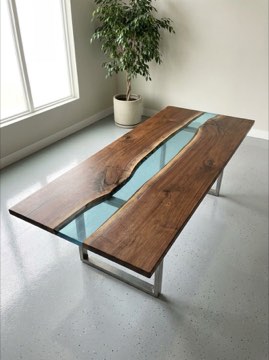 Made to order · 8 wks
Dining
Riverbed
Two mirrored edges with a channel of water between them.
84" × 40" · ≈95 rings$6,200
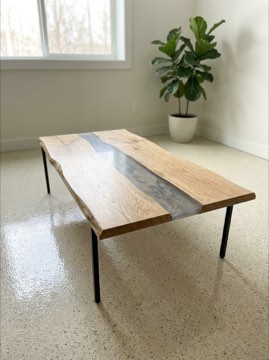 Made to order · 6 wks
Coffee table
Driftline
Low, long, and grey enough to disappear under whatever you put on it.
48" × 26" · ≈70 rings$2,450
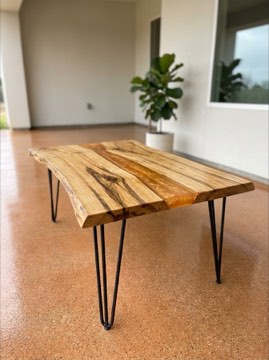 Made to order · 6 wks
Coffee table
Ember
Olive ash and amber resin — warm without being orange.
44" × 24" · ≈60 rings$2,150
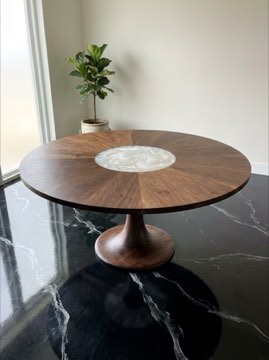 Made to order · 8 wks
Round
Full Moon
A full circle cut from segments, with a pearl centre that catches the light.
54" round · ≈110 rings$4,800
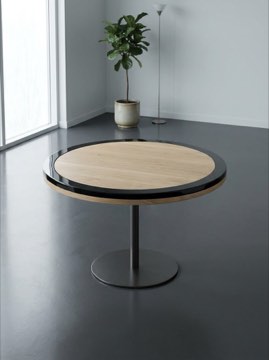 Made to order · 7 wks
Round
Eclipse
Black resin ring around a pale oak centre. Reads like an eclipse.
42" round · ≈80 rings$3,600
Every piece is poured from a specific slab and confirmed with you — photographed — before work starts. Or start with a floor →